
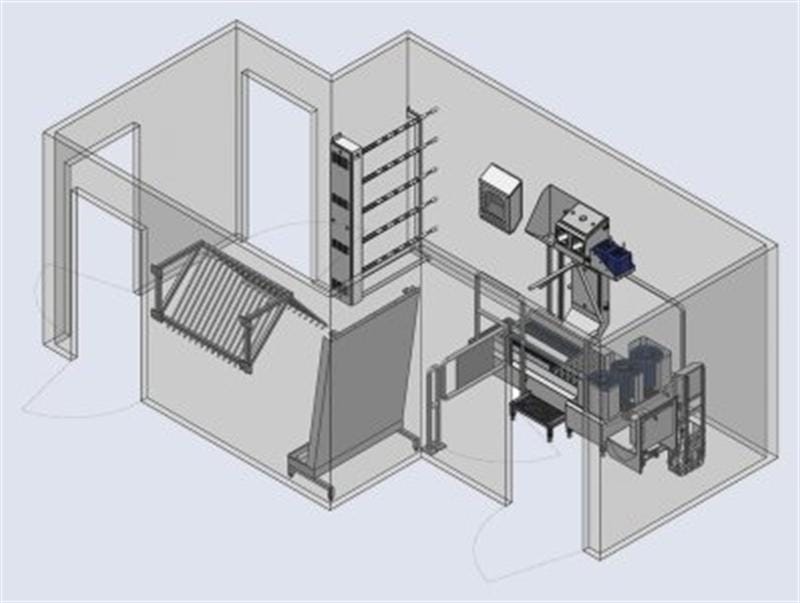
Tamper-proof access control
Particularly when it comes to personnel access, effective, non-circumventable access control must be used to protect hygiene-sensitive areas against contamination.
Depending on the hygiene regulations being applied as well as the number of persons that passes this access control per shift, the arrangement and structure of the access control as well as its cleaning and disinfection components – e.g. of hands and shoes or boots – must be able to be precisely determined. Then there is the additionally required hygiene equipment in upstream and downstream areas.
Due to their sometimes high degree of complexity, such measures can present a great challenge for owners – both in existing establishments that must be retrofitted as well as in new buildings. To correctly fulfill all requirements, the greatest possible confidence in the decision-making process is essential. This in turn can only be gained if all parameters and necessities are previously known ahead of time and can be accounted for during subsequent implementation.
Qualified support for this is offered by Kohlhoff Hygienetechnik (Unna, Germany), which has years of experience as well as extensive planning services. Various officially permitted design and equipment options can thus be taken into account just as can custom-made products that are adapted to a company’s individual situation.
The company has developed and produced equipment for personnel and industrial hygiene in the food processing industry for over 30 years. Its program currently includes circa 100 stainless steel products from its own production.
Starting from a specified or jointly developed requirement profile containing all essential functional, organizational and personnel conditions, Kohlhoff creates an exact CAD plan of the proposed solution for the existing or planned rooms.
Thanks to such realistic three-dimensional representations as well as detailed information about the necessary structural as well as building conditions, e.g. the position of connections for the installations, a solid planning and decision-making foundation is developed that can be submitted in advance to food monitoring authorities for approval.