
Ireland has been named the “Green Island” since ancient times. Its geographical location and an average precipitation of 1,000 mm rain annually are considered the cause of this. Since 2013, the government has also set its sights on honoring this title and made sustainability a top priority.
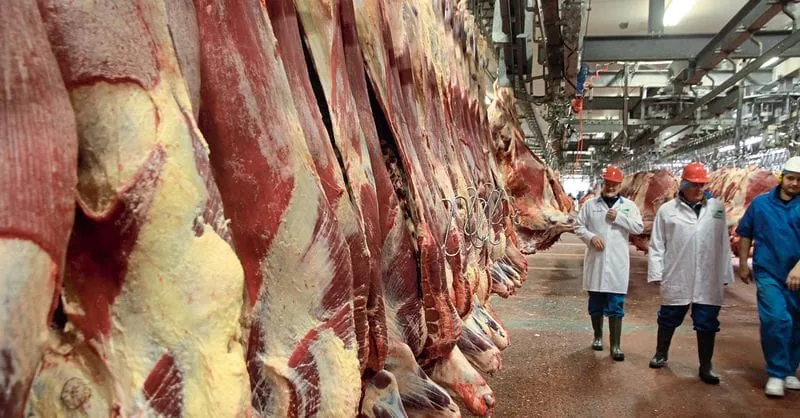

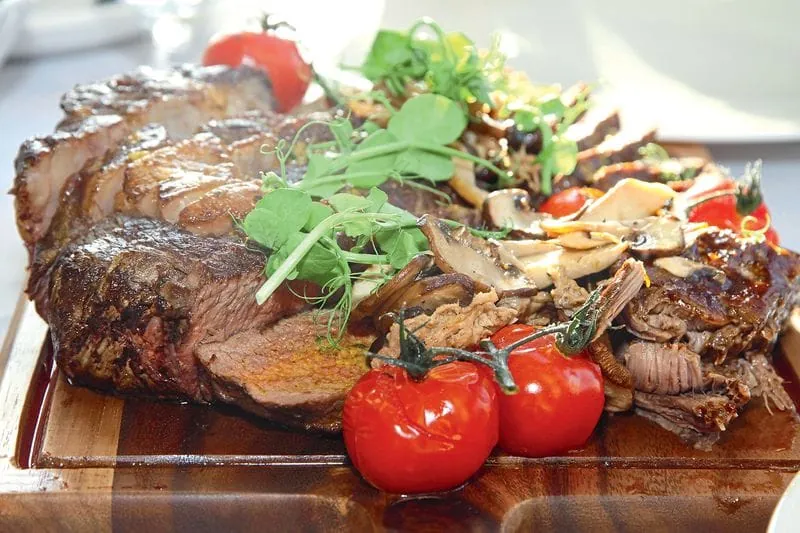
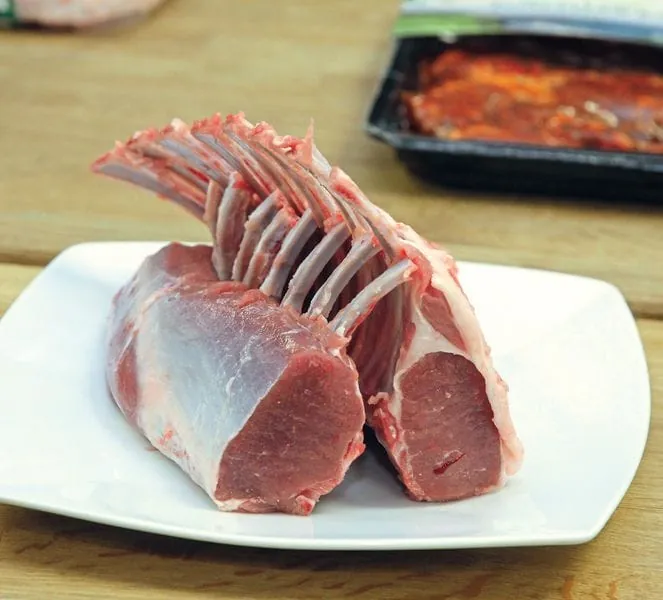
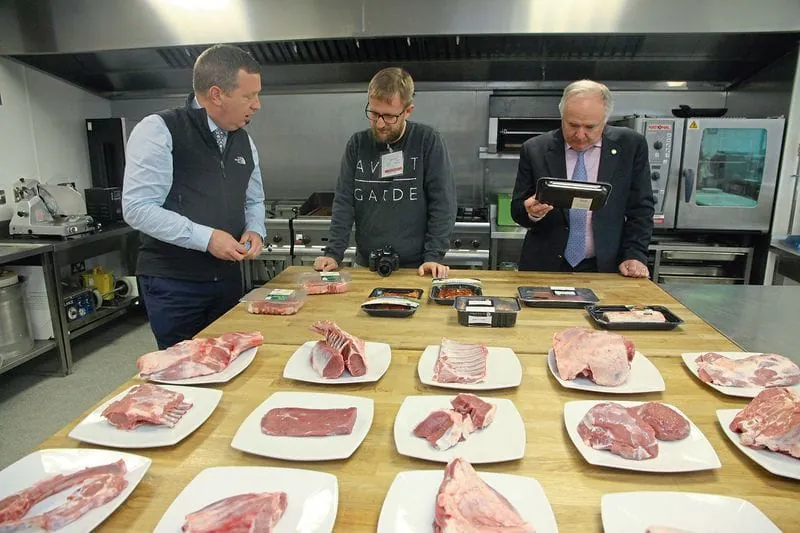
Export figures show that the Irish meat industry’s reliance on its green image is having some success. Year to year, it is increasingly fulfilling its claim of achieving the most climate-neutral agricultural production possible coupled with improved sales of its products.
Mark Zieg, department head of the Bord Bia sales organization, is proud of its current figures: “The total value of the exported meat and live animals increased by eight percent last year to 3.95 billion euros. Ireland currently exports to 84 countries worldwide.”
With these values, Ireland rose to become the fifth largest exporter of beef and veal; this sector alone grew by five percent to a turnover of 2.5 bill. euros. The export proceeds of lamb are quantified at 275 mill. euros; pork exports generated sales of 712 mill. euros. Total sales achieved with food exports are currently 11.2 bill. euros.
At 6.7 mill., the number of cattle significantly exceeds the population of Ireland (4.6 mill). Beef is primarily popular in gastronomy because of its vitamin and omega-3 fatty acids content as well as its ratio of fat to lean meat. Its suitability for extensive, value-increasing aging, high stability and a long shelf-life are considered further pluses. The self-supply of beef is over 800 percent in Ireland.
In Germany as well, sales trends also show a slight plus of two percent, primarily due to its use in upscale gastronomy. In recent years, German demand for lamb has become a focus of Irish producers. They export this meat not only as carcasses, but predominantly as de-boned goods with a high degree of convenience.
Sustainability in practice
From the view of Andrew Mullin, manager in the Origin Green program, the standards of meat producers are becoming increasingly strict. These include all production steps – from the farm to retail trade. Here, too, Ireland sees itself as a pioneer. In view of the numerous parameters of the sustainability program, sustainability will continue to be a permanent focus for further positive economic developments. Lower emissions of greenhouse gases, lower amounts of waste material and more efficient use of energy and water are measurable success factors.
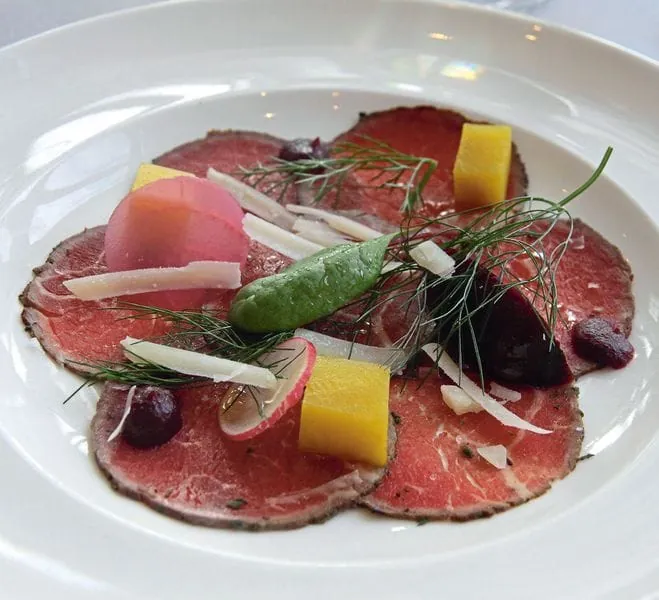
Those who seek good restaurants with first-class meat offers in Irish cities quickly find such establishments outside of Dublin as well. The issue of sustainability has long arrived with restaurant proprietors, retailers – and thus with consumers. Meat consumption at a high culinary level, without having a guilty conscience, is possible everywhere. Concepts that involve operating a farm with beef cattle, chickens and sheep for supplying various gastronomy companies are not a rare occurrence.
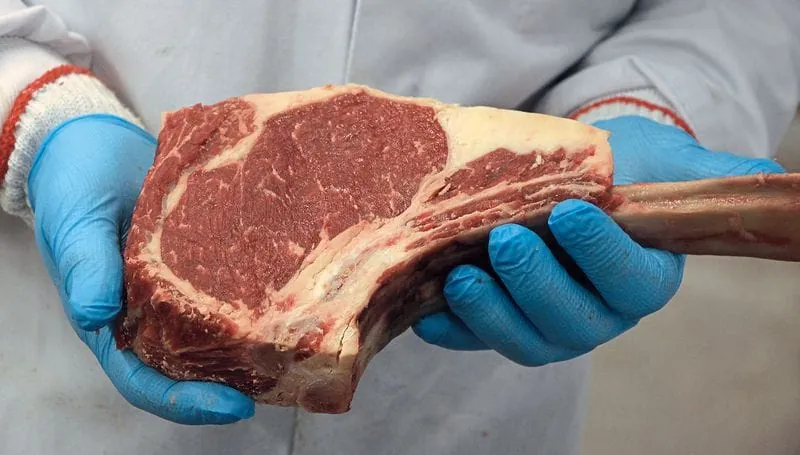
High-quality ingredients and the qualification of chefs are a recipe for success. Since Ireland is also considered an attractive holiday destination, gourmet tourism provides an additional impetus. In the Ashdown Park Hotel restaurant, an Angus porterhouse steak is not simply served as a main course, but literally celebrated in front of the guests’ eyes. The Redmond family not only owns this hotel, but also has a second one, various culinary establishments, and its own farm, which grows a variety of fresh, ecologically produced vegetables and herbs that quickly find their way into the cooking pot. Hotel guests are also invited to appetizing guided tours. (www.redmondfarm.ie)
Sights on Europe
John Murphy relies on specialties from Hereford cattle. The Managing Director and owner of Liffey Meats is regularly found in his production rooms; he places great value on the fact that meat is not only professionally cut here, but also slaughtered. “Optimal freshness and short paths” are the arguments for this concept. The windmill, which points out from afar the company’s location, dates from the turn of the century, as the boss proudly reports, meaning even before the start of the “Origin Green” campaign. It has long since amortized itself.
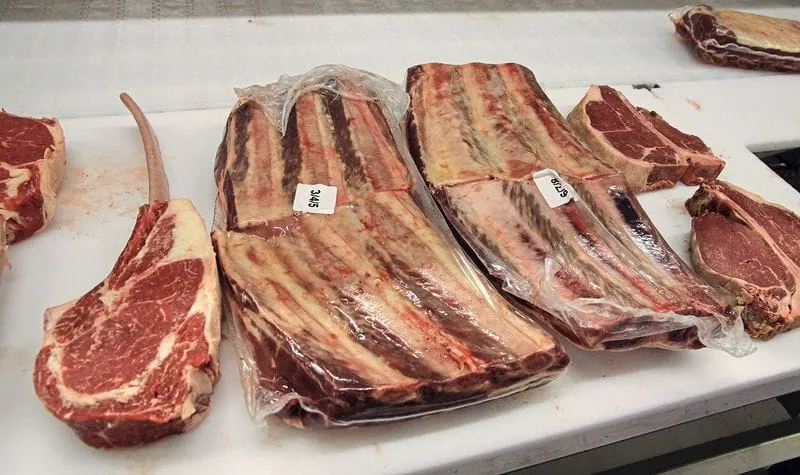
At Liffey as well, the shipping of quarters and larger pieces is still part of the company’s business, but the trend is going clearly towards convenience – household-sized packages for retailers throughout Europe. After hamburger patties, ground meat and steaks, the current top seller is meaty beef ribs with a grill-friendly length of 30 cm. In consumer-friendly three-packs, this meets the demand for several smaller portions for BBQs.
Over 500 employees are employed at this location. The company advertised for them in Poland, Eastern Europe and Brazil; the management says that they have settled in very well. At the Cavan location, approximately 100,000 animals are slaughtered and cut every year; two other slaughterhouses with a capacity of around 65,000 animals also belong to the group.
Another “big player” is the Irish Country Meats Group, whose Slaney Valley Range now enjoys great popularity in Germany as well. The group’s slaughter volume is currently 2.5 mill. animals per year; this year, the 3 mill. mark is being targeted. Some 525 employees are employed here, who generate an annual turnover of 200 mill. euros. A proportion of 95 percent fresh goods requires precise logistics. The company likes to show visitors that this quantity can be achieved with high quality as well. The topic of animal welfare plays just as much a role as do the regular audits to which the company is subject. Almost every week, neutral inspectors go through the production halls to ensure that the high standards are being met. The organic lamb sent primarily to Belgium, the Netherlands and Scandinavia is particularly intensively controlled.
Trend-oriented offers
Creativity is also a factor not only for the development department. Numerous types of raw sausages with exotic spices are prepared for pan dishes and grills. “Variety is in demand” is the motto. Thus, at least one new market-ready product with lamb meat is available every year. The most favorite are small packages for households with singles and couples who do not want to spend much time preparing their meals. According to the management, an increasing challenge is always being able to supply a product – but on the other hand, keeping an eye on incalculable developments and the associated minimum shelf-life levels.
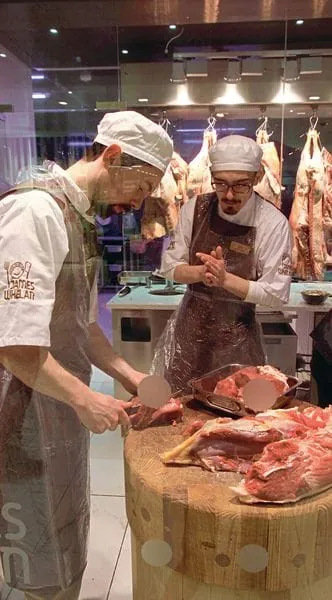
A further trend leads back to the roots. Absolute freshness and craftsmanship are a priority at James Wheman Butchers. Here, the customer who enters the specialist department of a large supermarket is able to witness the production of his roast. A room-high glass window separates the customers from the cutting tables; everything from the delivery of the beef quarter to the packaging of customer-sized portions is transparent. Ernie Kenny, responsible for marketing the till-now six branches, relies on honest handicraft and the associated higher degree of trust. The meat is offered in carefully matured quality; livestock farming is detailed in brochures. This concept has been growing continuously for ten years. To put its concept into practice, James Whelan Butchers need at least 120 m2 of space in the meat departments it manages. Because the large consumer markets are open at least 15 hours seven days a week, employee requirements are correspondingly large: circa 40 employees per branch.