
Consumer views on food production, especially of meat products, often contradicts their eating habits. The effects of this on the meat industry as well as the market opportunities for alternative sources of protein were the topic of the 42nd Lemgo Meat and Deli conference.
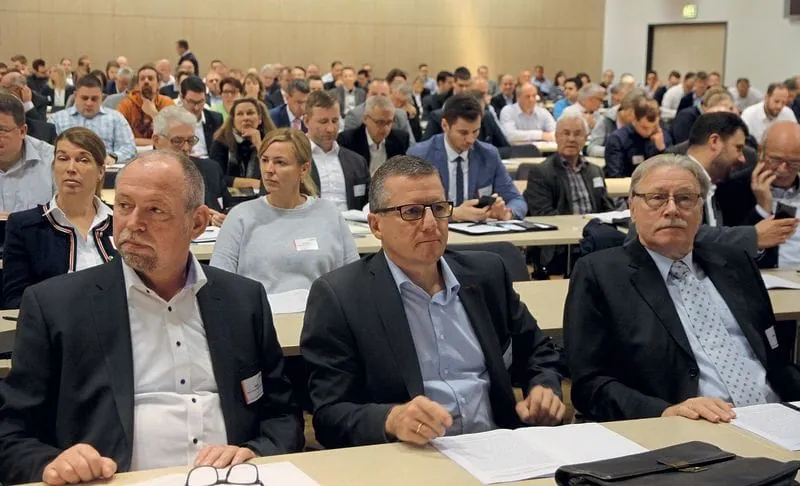

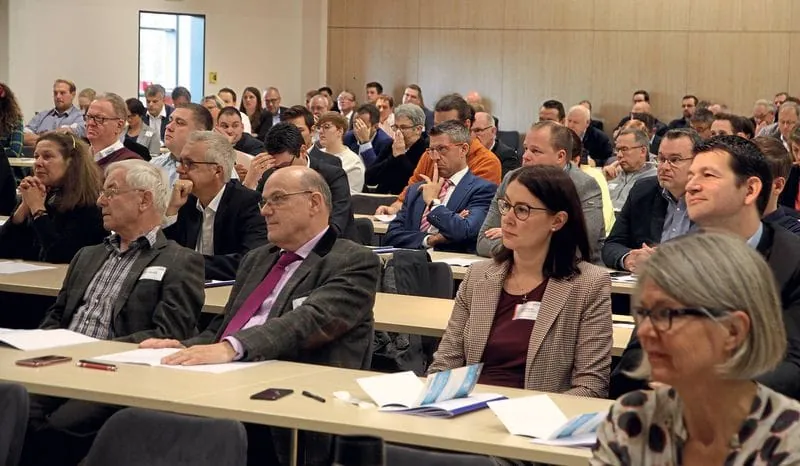



If, on the one hand, hobby chefs purchase grills costing thousands, but on the other hand feel guilty about eating meat, the meat branch is faced with the dilemma of trying to square the circle. Or, as Prof. Dr. Jürgen Krahl (President TH OWL Lemgo) stated in his opening speech: “Communication strategies are necessary!”
Prof. Dr. Jürgen Zapp (Vice Dean of the Life Science Faculty) emphasized in his welcome address that the university is now breaking new ground “beyond meat”. The teaching content at his institution is adapting to current developments with the aim of influencing factory farming. Whether laboratory-produced meat will be retailed in the foreseeable future is also under discussion.
Consumption remains nearly stable
In general, Matthias Kohlmüller (AMI Agrarmarkt-Informations-GmbH, Bonn) predicted fluctuations in the statistics on meat consumption in the near future. He expects a slight decline in per capita consumption of pork, for example, while suspecting that poultry will continue its trend. In general, it seems that German consumers are currently eating less meat. However, suppliers of meat substitutes are no longer benefiting from critical attitudes towards meat as much as they previously did. With a volume of one percent of the total market, the market significance of meat substitutes is still very low. Vegetable milk alternatives, on the other hand, have a share of 3.6 percent of the total market for milk products and are becoming increasingly popular.
Overall consumer expenditures in Germany on food amount to only 14 percent of their monthly income. At the same time, the variety of food alternatives is growing. The expert said that the best example of this is the demand for spreads.
A steady increase of to-go sandwich spreads results in less home cooking and thus in fewer food purchases. “Ready-to-eat” instead of home-made sandwiches is an unmistakable trend that is also causing the gradual loss of preparation know-how. Instead of roast meat on Sundays, ready-to-eat alternatives land in the shopping cart, especially in summer. The expert’s conclusion was therefore, “Meat consumption remains nearly stable; pork can nevertheless assert itself as a sought-after raw material.” Any meat supplier with this raw material plus an export license for China can still earn good money for now.
Alternative protein sources sought
Psychologist Thomas Ebenfeld even sees a possible “cultural revolution on the plate”. Since finite quantities of meat as a source of protein will lose importance, it is time to find alternatives. The many alternatives have long included the first attempts to offer laboratory-developed meat. This seems logical in view of the coming shortages of conventional goods. Whether power vegetables or insects, communication and marketing seem to be the biggest question in determining what direction things will lead. So far, however, distance, and even fear of the unknown, have played a significant role in slowing consumption. If it were possible to market the consumption of exotic foods with the striving for “self-optimization with a feel for adventure”, a new trend could develop. In times of the animal welfare debate, it could well be that those who advocate the careful handling of animals could more easily accept the shock freezing of insects as a method of killing than conventional slaughtering methods.
But it is obvious that to really change, consumers have a long way to go from simply having an interest in alternatives to actually tasting them. These alternatives must be imagined as analogous to discovering new pleasures. Those who want to taste insects for the first time are faced with a similar situation as before a first bungee jump. The psychologist described this as the hurdle that representatives of “Generation Greta” must master, but which also has a certain appeal.
Reasons for meat abstinence
Sandra Ebert, Master of Food Science & Engineering at the University of Hohenheim (Stuttgart), suggests that the consumption of meat and meat products has always been a traditional anchor point in human nutrition.
If efforts to reduce meat consumption became more explicit, the question of “why abstinence” should also be allowed. After all, pork, in particular, which is characterized by bacon and lean meat, is a true “jack-of-all-trades among meat proteins”. It is also easy to digest. There are a variety of options for those who want to eat less meat but not entirely go without it. However, these are still significantly more expensive than conventional sausage. The University of Stuttgart and other institutes are researching the production of hybrid products.
New products are being tested, for example, that blend animal and plant ingredients. The results so far show that hybrid raw sausages are particularly successful.
Further research needs
Meats and sausages are increasingly being purchased off the shelf, which can create conflicts between waste avoidance and optimal shelf life. Dipl.-Ing. Andrea Liebmann (Fraunhofer Institut Verarbeitungstechnik, Dresden) discussed the problem of recyclable packaging. Packaging is often composed of several materials, which can make its separation after use quite complicated. To ensure the purity of the recyclate, more effort is required compared to the packaging used till now. For some frequently used packaging materials, extensive research is still necessary to reintroduce them into the cycle. Composite films or PET trays that are used almost everywhere, for example, are problematic.
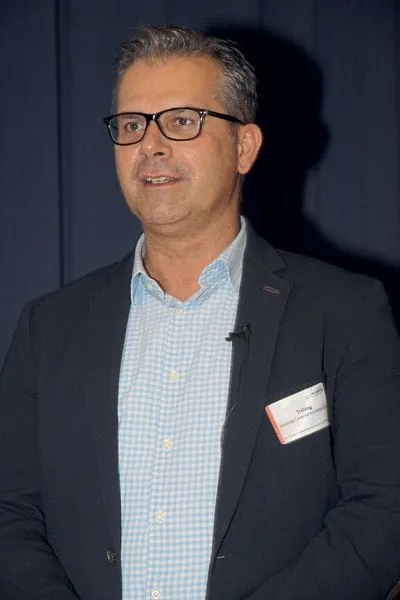
The use of “Blockchain” technology is intended to ensure greater safety and 100 percent traceability. Josef Trilling and Thomas Struckmeyer from Rheda-Wiedenbrück and Schlieren (CH) explained what lies behind it and where the opportunities lie. Today, DNA analysis makes it possible to determine at all times the specific animal a meat sample has come from and the route it has taken so far. This has been tried and tested for Swiss meat, proving that meat has an unalterable “genetic fingerprint”. In addition to DNA analysis, this technology is based on a sophisticated IT structure.