
The human digestive system is able to utilize just about everything necessary for its metabolic needs. Whether its wants all of this is another question. The Anuga Meat 2019 in Cologne dealt with this question at great length.
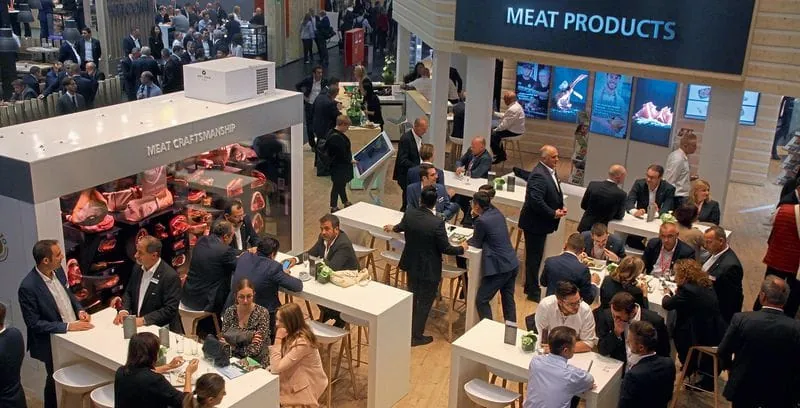
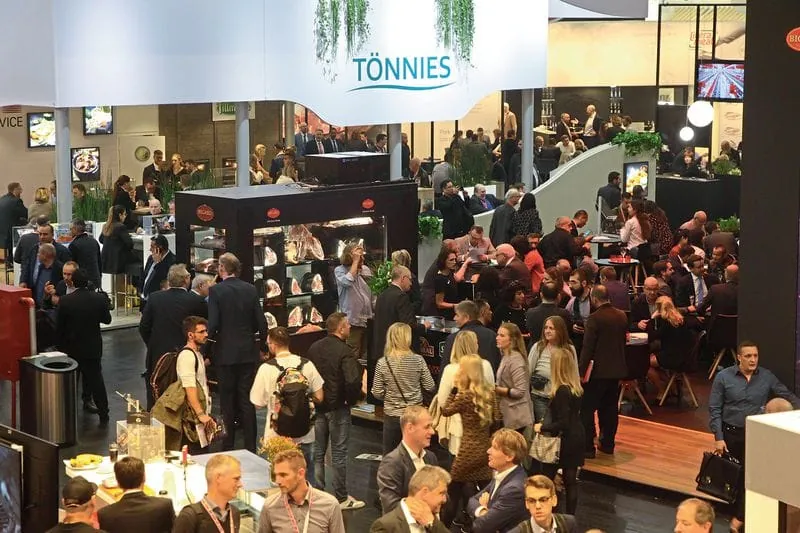
Acceptance for new products is definitely there. All the more so if the innovative new tidbit conforms to the standard model of foods eaten by Homo sapiens, including taste and appearance. As shown at the trade fair, burgers are the leading product in this area. Even if the meat substitute in a bun is made from peas, in a lab or composed of shredded mealworms, its appearance, bite and “mouth-feel” determines whether it will find its place on menus in the future.
In any case, the pendulum swing of current developments is quite wide. For one, these new foods are developed with the hopes they will become favorites of vegetarians and vegans; for another, they are also designed to be “super foods” that provide the athletically inclined with concentrated proteins, thus promising more strength and endurance. Purchases of such foods, which demonstrate added value for well-being and health, are steadily on the rise, with an annual growth rate of currently twelve percent. In this context, however, it is primarily seeds and grains that migrate into cereal bowls. New meat products consist mainly of individually packaged raw sausages with a low fat and a high protein content. Their target group is outdoor athletes such as runners and cyclists. Numerous established manufacturers are also committed to developing new and alternative foods. At Rügenwalder, for example, the share of meatless production – once utterly ridiculed – is estimated at a proud 40 percent.
Meat from the whole world
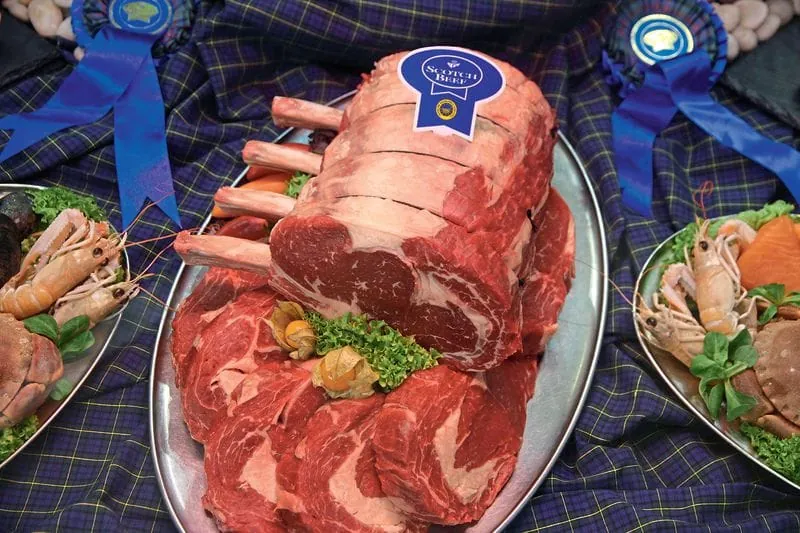
Protected geographical indications are another trend. Underscoring this, a delegation from the Scottish Ministry of Agriculture pointed out that the meat sector – as well as its high quality – is inextricably linked to the area’s agriculture. The delegation made clear that “Scotland did not vote for Brexit.” The Scottish government is working to stay in Europe but must reckon with the worst-case scenario. A similar statement was made at a press conference of the Irish Bord Bia.
Irish meat exporters also see the German market as an important factor for the future. Donal Denvir, Germany Managing Director of Bord Bia, stressed, “We are focused on the European market.” Even though most of Ireland’s meat is delivered to Great Britain so far, the country should focus on its EU partners in view of the fact that the exchange rates of the pound sterling are no longer as stable as they once were.
German suppliers also see no reason to panic. Markus Wagner (Alexander Eickeler GmbH, Erkrath) stated, “We don’t have a special strategy – we are doing business as usual.” And while “completely open to any results”, his company hopes for a postponement of Brexit. He sees the developments of lamb and game from New Zealand as positive. In general, meat imports from sustainable production are in greater demand than in previous years. “The meat must convince potential customers at meat counter tastings.” This will be his future strategy. What is true for lamb can also be true for venison and hold promise for the future.
Consumers repeatedly ask if animals are ethically treated. Regionality plays a role, as do water consumption and ecological compatibility. A KO-criterion has turned out to be, “Are forests being clear-cut for this?”
Poultry trending
Pascal Brauner (Heidemark) also sees a trend towards alternative protein sources. The poultry specialist attaches great importance to the fact that convenient poultry farming need not rely on palm fat. His primary focus is on turkey meat. In the future, the company will offer barbecue seminars that demonstrate the diverse uses of poultry. Consumers who want to serve their guests grilled turkey even more easily and quickly can buy pre-cooked skinless, boneless turkey ribs. At LDC, the motto “Nature & Respect” applies to their entire range of poultry. In addition to chicken, duck, and turkey, French suppliers want to make guinea fowl palatable to their German neighbors as well. The free-range animals are marinated in a fine sauce and sold pre-packaged on the refrigerated shelf. A new addition to the line of organic farmed animals is a festive roast with champagne and raisin filling.
Henning Schmidt (Landgeflügel) is just as satisfied as his French colleagues. “Products that are ready to pop into the oven are in particularly high demand among younger customers,” he says. If something can be cooked fast, has as few bones and produces as little waste as possible, consumers will even purchase a whole chicken for the oven. At Plukon, simple preparation in the single-serve bowl is a success. The company offers four chicken bowls with typical Asian flavors. Consumers get pre-seasoned chicken and rice that can be quickly heated and served. Each exotically flavored bowl has a product weight of 400 grams.
If you prefer to cook at home, but want to be just as sure of success, the Borgmeier Kikok chicken is a good option. The company celebrated its 25th anniversary in 2019.
Specialties in demand
The domestic rabbit has been rediscovered as a food source. Hardly eaten in Germany for decades, this meat is now requested more frequently as pre-prepared, oven-ready cuts. The meat cuts marketed by the Belgian company Chevideco are considerably larger. The traditional family business trades worldwide with horse meat. In addition to local wares, it also offers horse meat from Argentina. “For connoisseurs,” the family says. The Belgians also see a worthwhile potential for gourmet restaurants in Germany.
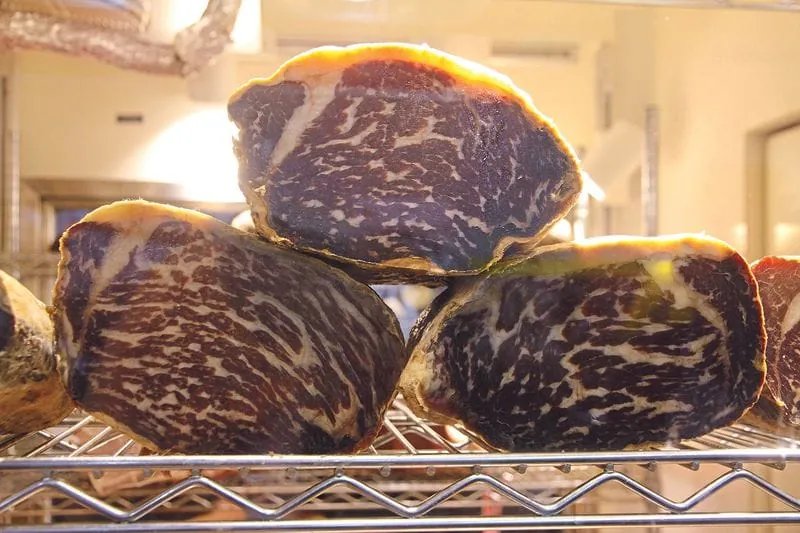
Belgian Duroc pigs offered by Spezialitäten-Partner promise low cholesterol levels and a pronounced taste. Their feed is enriched with two percent olive oil. While the usual cuts of meat are marketed in the region, the hams are sent from Ghent to Italy for maturing.
At Westfleisch in Münster, the cooperative relies on its roots. Their motto is, “We know our farmers.” And as close as the producers are, as far away are the company’s buyers. The Westphalian company now looks forward to increasing demand for pork in Japan, whose market requires very specific cuts. Bellies and bacon, split and packaged for gastronomy and consumers, regularly travel to the land of the rising sun. During the fair, the cooperative also emphasized its competence in beef. Licensing in Asia is the next step for the expansion of sales channels for its young Simmental bulls. To keep up with desires for less packaging, the cooperative also offers caterers a “burger roll” with individually removable patties in a tubular bag.
The convenience trend
Vion Managing Director Johannes Kölker sees convenience food as a continually growing segment. For him, the view across the Dutch border is a source of inspiration for pre-packaged portions that are sent to the consumer with significantly less film and cardboard packaging. In his opinion, the new cuts – coveted not only by BBQ fans – are suitable for the easily recyclable self-service packaging that has 70 percent less waste than conventional film-covered trays.
As a new convenience product, industry giant Tönnies presented a snack based on the Bavarian specialty “liver loaf”. The sausage is shaped like a pretzel, then breaded and heated. The self-service version contains a portion of mustard.
Handl Tyrol presented a clever snack for schoolchildren. The small raw sausages are targeted at parents who want to give their offspring breakfast at school without having to make sandwiches. The item takes nutritional and physiological aspects into account. With less fat, no sugar and no need for refrigeration, the handy four-packs fit any school bag and cause no spills. Similar products from other suppliers such as snacks for breaks or protein-rich sports foods are a sensation among this generation’s recreational athletes.
The Schutzverband für Parma-Schinken also extolled its successes. The association’s 140 members export 75 per cent of all hams matured in and around Parma throughout the world. Germany is the second largest buyer of these hams, importing 407,000 of them. Rainer Heck