
On the British Isles, Scottish beef has long been renowned for its high quality. The fact that increasing numbers of gourmets – in Europe as well – are discovering the beef with the PGI seal is shown by the steadily rising export figures. There are reasons for this growing demand, which also extends to lamb from Scotland.
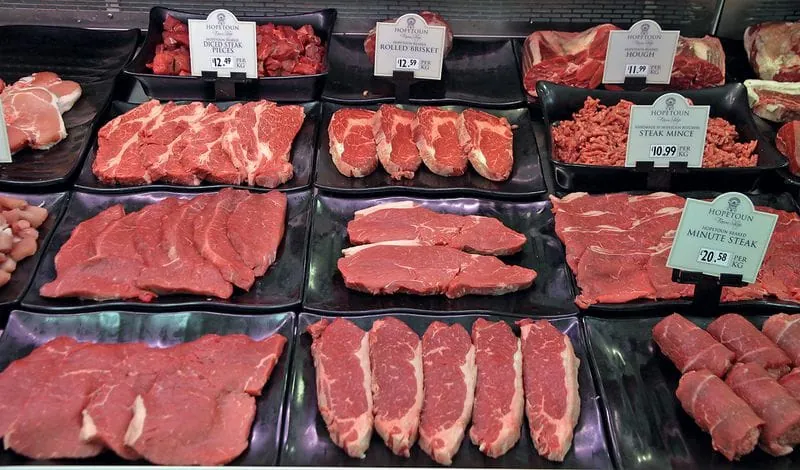
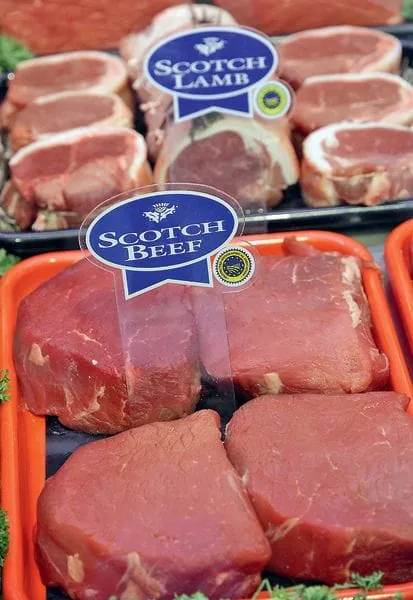
Those who know Scottish culinary specialties are not surprised when restaurateurs from the northern part of the British Isles designate themselves as choosy. Taste and enjoyment are what count when they select meat suppliers. “Ideally, cooks want to personally know the butcher who has chosen and slaughtered the animals,” explain Anne and Clive Davidson, proprietors of the Champany Inn hotel-restaurant. This is why this establishment, which is highly appreciated by meat lovers, also employs its own butcher and only purchases meat from domestic animals. This is reflected by the menu. Lamb and beef carry the protected geographical indication seal (PGI) and the signature of a chef who gladly caters to the preferences of his guests for generous portions. “A crisp crust on the outside, medium rare and tender as butter on the inside,” says Clive Davidson, defining his idea of perfection on the plate.
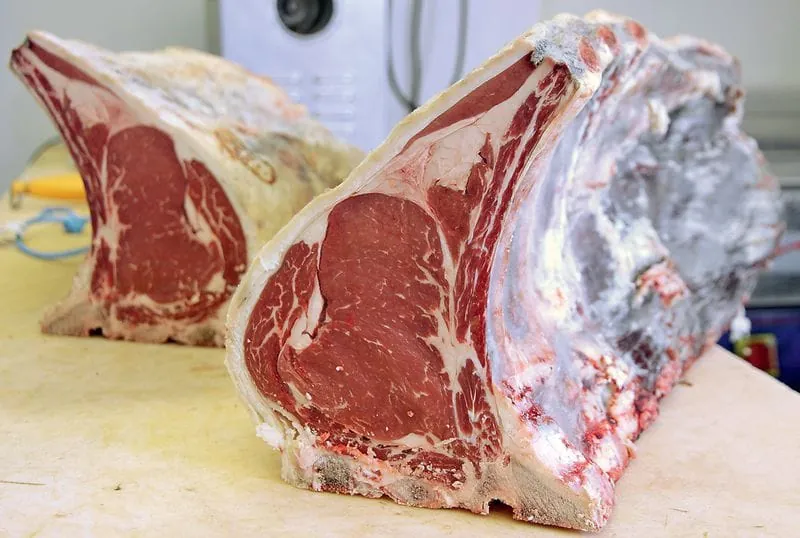
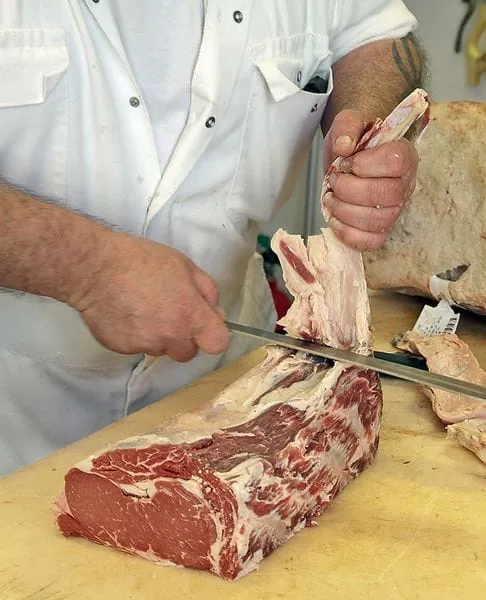
At the charcoal grill, guests can watch from the table. House butcher Billy Anderson makes sure that all cuts are optimal. He works by eye when he uses the knife. The result is steaks of approximately equal weight that have been dry-aged for at least three weeks. These enter the kitchen with an impressive raw weight of 350 to 800 g. By this time at the latest, it is clear that meat plays the leading role here and that steak enthusiasts are the main target group. By specific request, smaller portions are also served, but such requests are rather seldom.
Billy Anderson is also responsible for smoking the breakfast bacon or sides of salmon for the appetizer plates. He works in a separate building on the property, which is dedicated exclusively to meat aging and cutting.
Dry aged
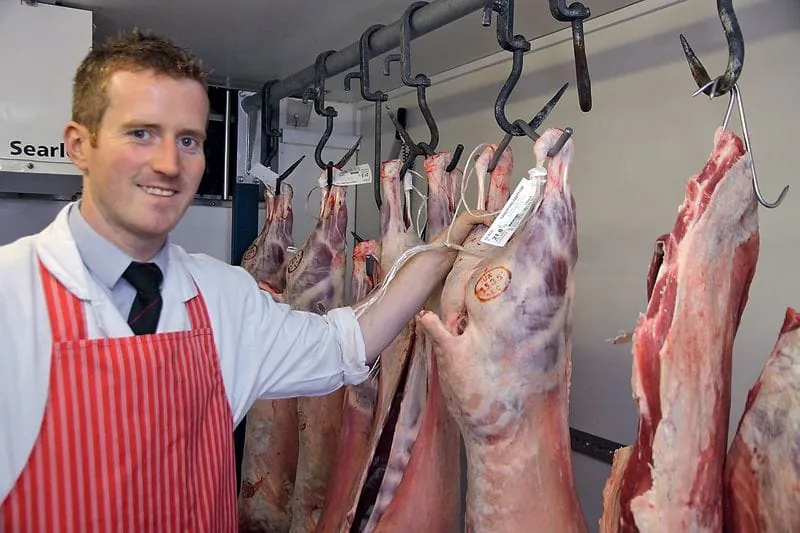
Anyone who values exceptional quality in beef and lamb for home cooking also has the corresponding offers in Scottish cities. “There are still some small butcher shops who do everything by hand,” explains Neil Macvicar, Managing Director of Martin Baird Butchers in the town of Melrose near Edinburgh. The business is located on the town’s main shopping street and its 40 m2 are clearly laid out for customers. Products that don’t fit in the ten-meter long refrigerated display case are gladly and quickly brought from the cool room and cut as needed. It is especially important for the family-owned and -operated butcher shop that meat be hung at least one week in the slaughterhouse before starting the dry-aging process of over two to six weeks in the shop. Lamb also ages for three weeks before the thighs, cutlets or backs are sold. The proprietor obtains his beef from nearby farms and prefers Aberdeen-Angus hybrids because these are best suited for dry aging due to their fat structure.
Next to private customers, the company services numerous gastronomy businesses in the area. “In the meantime, we not only offer first-class meats; our range of convenience products is increasing as well,” says Neil Macvicar. If Scotch Eggs (boiled eggs in a fried sausage-meat crust), Black Pudding (blood sausage meat for frying) and Haggis (filled sheep stomach) have been among the Scottish classics for decades, small sausages and complete seasoned menus are the hits with the younger generation. The product range is rounded out by free-range turkey and game specialties from the surrounding forests. Ready-to-eat, deep-frozen menus can be delivered weekly to homes if desired. Even in the Scottish province, hardly any butcher shop can survive without a catering service, according to Martin Baird, who also offers this service.
Optimal breeding conditions
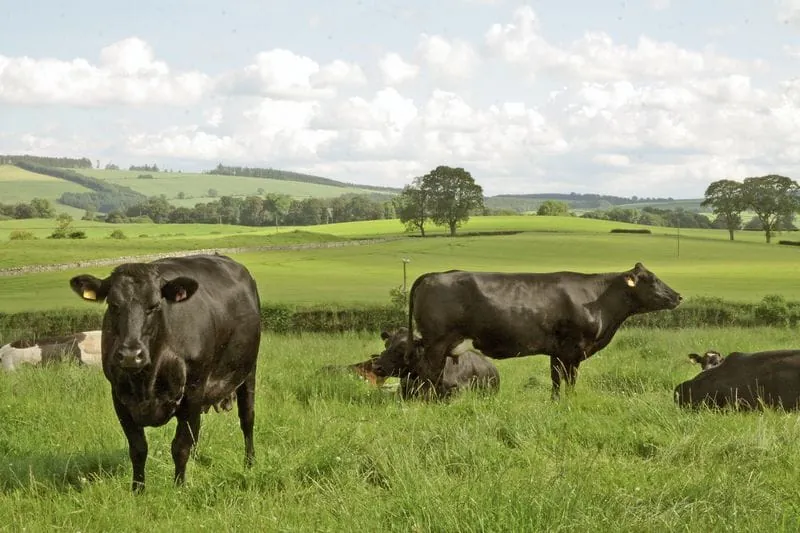
Tradition is highly important when it comes to production of these Scottish specialties. Craftsmanship plays just as an important role as does the care that farmers take in raising their animals. Special value is placed on detailed traceability and the optimal health of beef cattle and lambs. The Scots are working on reconquering lost terrain in exports. A further stimulus is the competition for the most innovative and successful animal breeding and fattening farm. In 2012, Robert Neill and his wife Jac won the title “Scotch Beef Farm of the Year” for their Upper Nisbet farm in Roxbergshire. They are the third generation to manage 435 ha of enclosed farmland. By cooperating with two neighbors, they have been able to increase their efficiency. They have 300 beef cattle, almost all of them Limousin hybrids. The farm’s buyers are predominantly butcher shops in the region; they supply meat year-round. The animals live on the meadows, the hay for the winter amounts to circa 80 ha; barley is cultivated on an additional 150 ha. This is the basis for the farm’s concept of feed self-supply. Robert Neill deliberately avoids imported soy beans, because as he says, “One can never be certain whether gene-manipulated material has been mixed in.” Instead of soy beans, he uses protein-rich beans he has grown himself.
The animals reach maturity between 14 and 24 months. Bulls have a live weight of about 610 kg; female animals weigh around 572 kg. The farmer is proud to personally accompany each animal from birth to sale and to have always been informed about its condition. Ear tags with memory chips were developed on the farm and are also used in the birthing stall – which is even pleasantly warm in winter – in order to always have a current picture of the animals’ conditions. At the time the tags are inserted, a tube with tissue from the calf is removed using a patented special construction, in order to complete prescribed examinations. “It is much easier to send these tubes to a laboratory than to have to round the cattle up later and have the tissue removed by the veterinarian,” says Robert Neill about the advantages. The chip in the ear tags records the animals’ weight once a month, among other things. “This lets me know what each kilo of meat costs me, and thus lets me work much more economically,” he says.
Guaranteed quality
In addition to specialty butcher shops, farm shops and supermarket chains are increasingly responding to the demand for PGI Scottish beef and lamb. This label for quality meat from Scotland, produced according to strict specifications, was developed approximately 25 years ago and can be found on increasing numbers of packages in the refrigerated section of stores. The focus of these specifications is animal health and year-round outside grazing to the greatest extent possible. Revenue from the production of red meat (lamb and beef) is estimated at circa 1.7 billion pounds and corresponds to over one-quarter of the proceeds of Scottish agriculture. Over 50,000 jobs depend on Scottish meat production, according to Quality Meat Scotland. It is up to the farmers to whom they sell their animals. Many insist on supplying regional butchers directly. On the other hand, master butchers also place value on appraising animals before purchase. Auctions and fairs such as the Royal Highland Show, a summer highlight that attracts large crowds each year in Edinburgh, are classic trading hubs for live animals as well as for products from and for farms. Cows especially are styled almost like fashion models in order to convey the best impression to professional audiences. Animals are judged, awarded and traded here.
Steadily increasing exports
Large international firms have long been active in this business. According to James Parker, export manager at the internationally active ABP Group, his business buys 1,500 beef cattle weekly. The largest part is marketed as Scottish quality meat, of which 600 animals per week are sold at the Sainsbury’s supermarket chain. Approximately 120 Aberdeen-Angus beef cattle from Northern Scotland are slaughtered per week and cut in a central ABP cutting plant. “Our exports have steadily risen in recent years,” he says. Above all, Belgium, Sweden, France and Switzerland are important buyers. ABP wants to develop sales in Germany to a greater degree. “Scotland is associated with premium quality,” according to Parker. “We are thus striving for a slaughter volume of 4,000 animals per week in order to serve the growing demand in the long run.” At the same time, he primarily has an eye on the top-quality market, which is also growing in Germany.
In order to be an attractive buyer for farmers, ABP has developed partnership programs that clearly define commitments, requirements and conditions. “Farmers who deliver animals to us receive their money as soon as the animals have been inspected,” is ABP’s promise. Nationwide consultants responsible for smooth workflows travel throughout the country developing and maintaining personal contacts.