
In mid-2006, the Bell AG company of Oensingen, Switzerland almost completely finished the expansion and modernization of its fresh meat production company. This meant successful realization of a project designed to set a significant signal for the future capacity of the Swiss meat industry and one which resulted in the start-up of one of the most modern slaughtering, portioning and processing businesses ever.
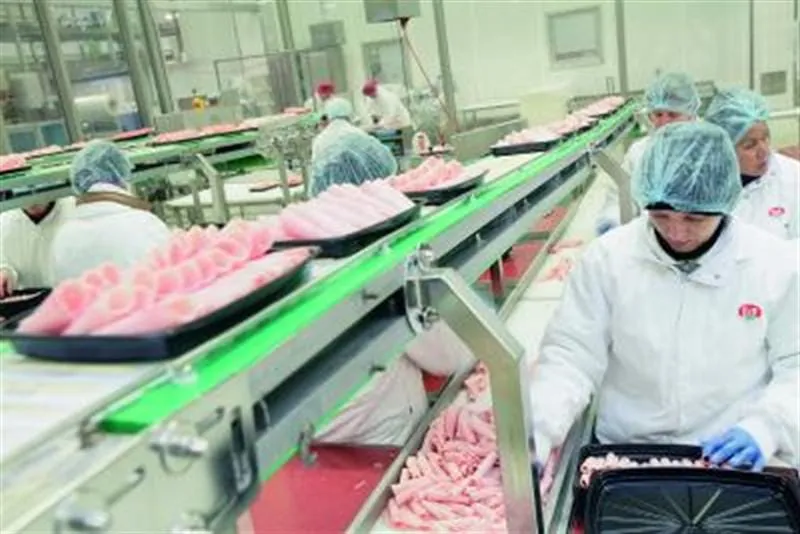
Cutting-edge meat production
The Bell Group, with previous-year sales of some 910 million euros, making it Switzerland’s leading meat processing company, invested circa 83 million Swiss francs renovating and adding to its fresh meat production plant in Oensingen. The declared goal of the project and its realization was to concentrate slaughter and portioning of beef cattle and calves at its Oensingen site and slaughter and portioning of pork in Basel.
With the new formation of its fresh meat business sector at the beginning of the year, Bell took a further step in its rationalization process, which will be suitably completed in late 2007 with the planned closure of its Geneva plant.
The company offers a complete palette of fresh and deep-frozen meat products, delivered either vacuum-packed for counter sales or in self-service packages for supermarket self-service departments. In addition, the company is the largest sausage and charcuterie manufacturer in Switzerland, producing a complete assortment of processed products in its Basel, Lausanne and Gossau plants. Most of the meat used comes from its own plants.
Over 50 percent of Bell wares sold in retail and wholesale shops are self-service products. In addition, Bell supplies restaurants and the food products industry with semi-finished and finished products, depending on customer needs. It no longer operates its own butcher shops, however.
In addition to typical meat cuts, its leading products include ground meat, hamburger and Chinoise (meat fondue). But its new product line “Bell Easy Gourmet” (www.belleasygourmet.ch), meat prepared for the microwave, is becoming increasingly popular.
At Bell in Oensingen, only beef cattle are slaughtered and butchered; in Basel, only pork. Self-service packaging for both meat types, however, is handled primarily in Oensingen. From here, fresh or deep-frozen products leave the plant in all possible degrees of processing, from large, roughly portioned meat cuts to sales-ready self-service packages for single households.
Expansion and concentration
Bell is a success story that began in 1971 with the cornerstone ceremony in Oensingen; at that time the company was still run under the name Grieder. While still under construction, the Hermann Grieder AG butcher shop was bought and completed by Bell AG. Slaughtering and portioning beef and pork has brought the company continual growth. This success has likewise necessitated constant structural expansion. Since 1971, refrigeration facilities, work, social and office areas have been added to in a two-year-rhythm. To ensure sufficient room for future growth, all available property bordering the main plant was bought as well. This strategic vision paid off in the end.
Expansion took place not only in Oensingen, but through Bell’s permanent takeover of various companies, including the Coop butcher headquarters. This development led to creation of many small, mostly specialized fresh meat production companies within the Bell Group. The constant increase of food safety, hygiene and quality assurance regulations over the years, however, caused ever greater investment needs at the various production sites. This made it necessary for Bell to concentrate its activities on fewer locations and invest primarily in these. The result was that the Bell Group concentrated the slaughter and portioning of beef cattle and calves in Oensingen and that of pork in Basel. In addition, meat production continues at the company’s Cheseaux-sur-Lausanne plant as before. Particularly in Oensingen, this strategic decision led to a modernization and expansion project such as the Bell Group has never experienced in all its 140-year history.
Project idea and master plan
The first ideas for the project go back to the year 1999. At the same time, the HLS, Switzerland McDonald’s logistics center, also had expansion plans. Through corresponding negotiations, Bell AG succeeded in gaining enough building land. Bell then ceded its rights to build a new logistics center in Oensingen to the HLS. The idea of the “Food Town” was born. The HLS began constructing this center in December 2000; operations could begin in November 2001.
The benefits for McDonald’s as well as Bell include fewer transports, a central location, and for Bell, direct connection to an external refrigeration warehouse.
In August 2002, the Bell AG Board of Directors authorized an investment volume of 83 million Swiss francs for renovating and expanding the Oensingen site. Construction began in September 2003. The project consisted of four construction stages, which were rapidly completed. Temporary arrangements allowed production and deliveries to be maintained throughout the entire project. Bell’s high quality and hygiene standards were never affected at any point.
A far-sighted master plan for the available building site was created, which will enable the following primary measures to be realized by 2020:
-Creation of personnel parking at the eastern edge of the Bell AG building site in Basel. Moving the parking lot created a free area on which the new building project can be realized.
-The basement of the new building will be used for deep-frozen production and manufacture of McDonald’s patties.
-The fresh meat portioning facility is located on the ground floor, as is self-service production.
-The logistic infrastructure is located between production and shipping.
-Existing operations will be completely revamped; the new concept sees its use as a refrigerated holding warehouse and infrastructure space for production.
-No exposed installations will be present in hygiene areas. All technical facility installations will be located in separate buildings or special installation levels above the work areas.
-The maintenance shop will be built outside of the production area.
The entire plan was developed to ensure the best prerequisites for meat production. All required climate control conditions are built-in, for example, to ensure fulfillment of hygiene regulations. At the same time, care has been taken to develop ergonomic workplaces that promote employees’ well-being. The entire planning concept was continually compared to the master plan so that after building completion, future expansion steps can be realized without influencing existing buildings.
In terms of ecology, rainwater is used to cool evaporators and all feasible energy-recovery measures have been taken to reduce CO2 emissions. All possible heat recovery components as well as organic building opportunities were incorporated into the project as well. A total 90,000 m2 of new building volume and circa 40,000 m2 of renovated building volume was realized.
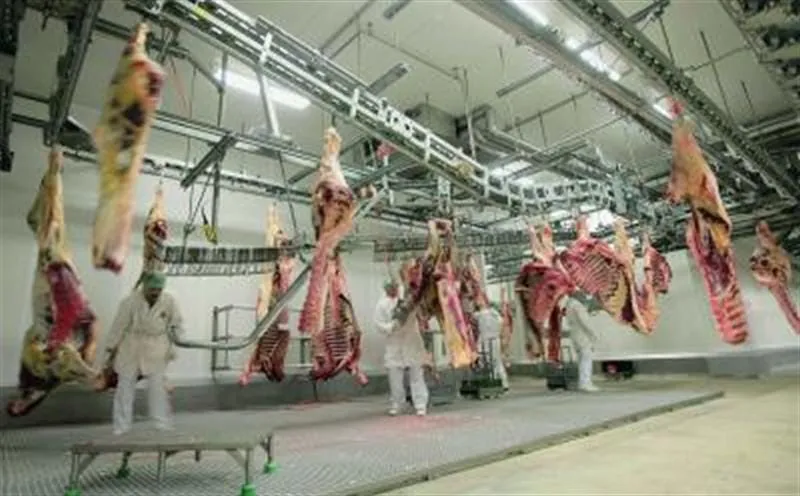
Logistics: a major portion of overall investments was spent on logistics. The entire operations of Bell AG in Oensingen were logistically planned to fulfill the motto “No vehicle traffic”. This means that after slaughter, meat is automatically transported to the entrance of the portioning facility.
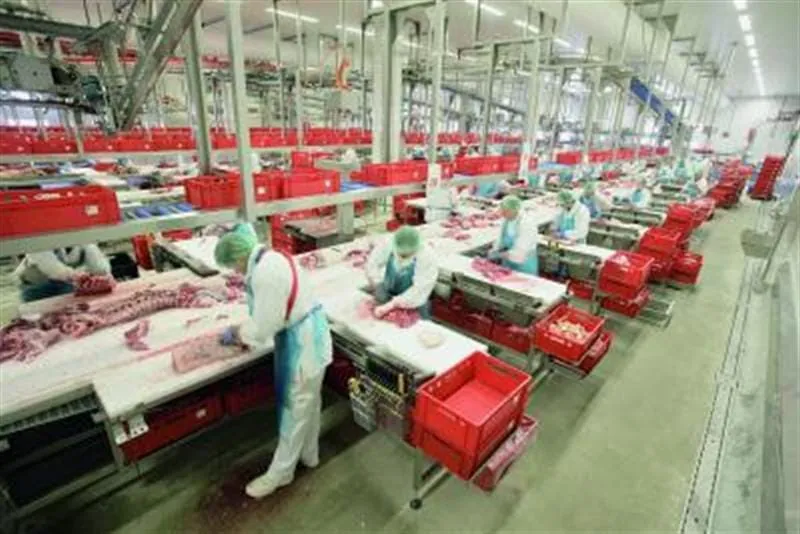
The meat pieces are then portioned on the butchering table. Expensive cuts, bones and trimmings are packaged separately and sent in containers to their ultimate destinations. Empty containers are automatically cleaned in a washing facility and then stored in a hygienically flawless empties store that can hold circa 20,000 containers.
Meat cuts destined for sale are packaged in a dedicated storeroom that can hold up to 32,000 containers.
The picking unit has access to this storage room and can issue advance requests for transfer of desired products and articles to a dynamic intermediate facility that can manage 7,000 containers. This part of the warehouse enables fast access to even the smallest consumer units, guaranteeing delivery to Bell customers in the shortest possible time.
After picking, selected articles are stored in a supply warehouse while awaiting pickup by shipping. To maintain hygiene conditions in these areas as well, internal and external containers are used throughout the plant. Internal containers do not leave the building. To deliver to customers, wares are repacked from internal to external containers in the picking area.
Logistics in the deep-frozen production area includes transport of deep-frozen products directly to the deep-freeze warehouse; this transport takes place in a controlled climate below ground, enabling deep-frozen products to be kept separate from fresh packaged meats at all times. Concretely, this means that deep-frozen products and fresh meat products are sent to customers via separate shipping units.
An essential feature of Bell AG’s logistics concept is its online meat picking system as realized in this project. Directly after receipt, orders are issued directly from the high-bay rack warehouses, labeled and then sorted according to customer needs using a line sorter.
Competent execution: The planning for Bell AGs major project began in 1998 with the zsb architekten office in Oensingen.
Bids for three logistics areas were requested and then awarded:
-WVG Kainz of Hirschenberg, Germany, won the contract for the portioning facility and carcass transport.
-Stork MPS of Lichtenvoorde, Holland, won the contract for container storage and picking, including roller loading in the shipping area.
-Banss GmbH of Wels, Austria, was given responsibility for all suspension track conveyance systems and automatic transport to portioning tables. Bell AG assigned zsb architekten with management of all quality, deadline and budget constraints by the contractors during the entire project.
At the same time as the new building and renovation project in Oensingen, the company’s business areas went through dramatic changes. One goal of this project was centralizing production and concentrating the company’s forces. The plants involved in fresh meat production, located in Bern, Kriens, Gossau, Lyss and Hinwil were rapidly integrated in Oensingen. The goal of slaughtering and portioning beef and calves in Oensingen and pork in Basel was already in place as of July 1, 2005. Solutions for all affected employees were found. In the end, fewer than ten of the 150 affected persons had to be dismissed. Since June 1, 2006, the new building and renovation project has been almost entirely put into operation.
After completing its renovation and expansion activities in the Bell fresh meat center in Oensingen, rationalization measures began to take effect. To use its internal synergy potential to the utmost, the fresh meat and Romandie business areas were consolidated on January 1, 2007. The operation in Geneva will be closed at the end of this year and its activities relocated to Cheseaux and Oensingen. All employees affected by these changes will be offered jobs in Cheseaux. The Cheseaux plant is an important site for the Bell Group’s meat production and charcuterie manufacture in French-speaking Switzerland.
Technical solution
Operations in Oensingen are specially set up for the slaughter of beef and calves. Animals are anesthetized using captive bolt pistols (stunners) in a combined unit manufactured by Richner.
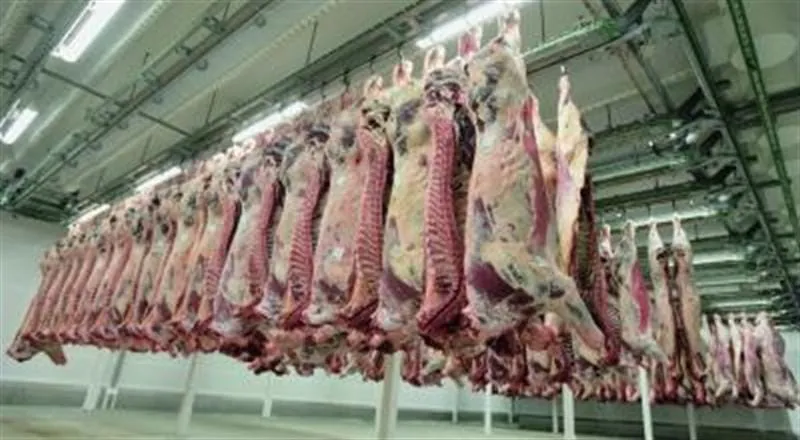
Stork MPSs slaughtering line contains a mechanical dehider. Animals are manually split with a bandsaw and then stored in waiting halls for circa 48 hours before further portioning.
In the portioning area, five bands are used to cut carcasses (one for calves and four for beef) according to customer needs. At the end of the lines, the various portions automatically continue on their way in internal containers, packaged in container bags. Previously, however, some products are packaged in various shrink bag facilities.
In the standardization facility, mixing equipment as well as fat determination devices is available for further processing. This allows products to be mixed to meet customer requirements.
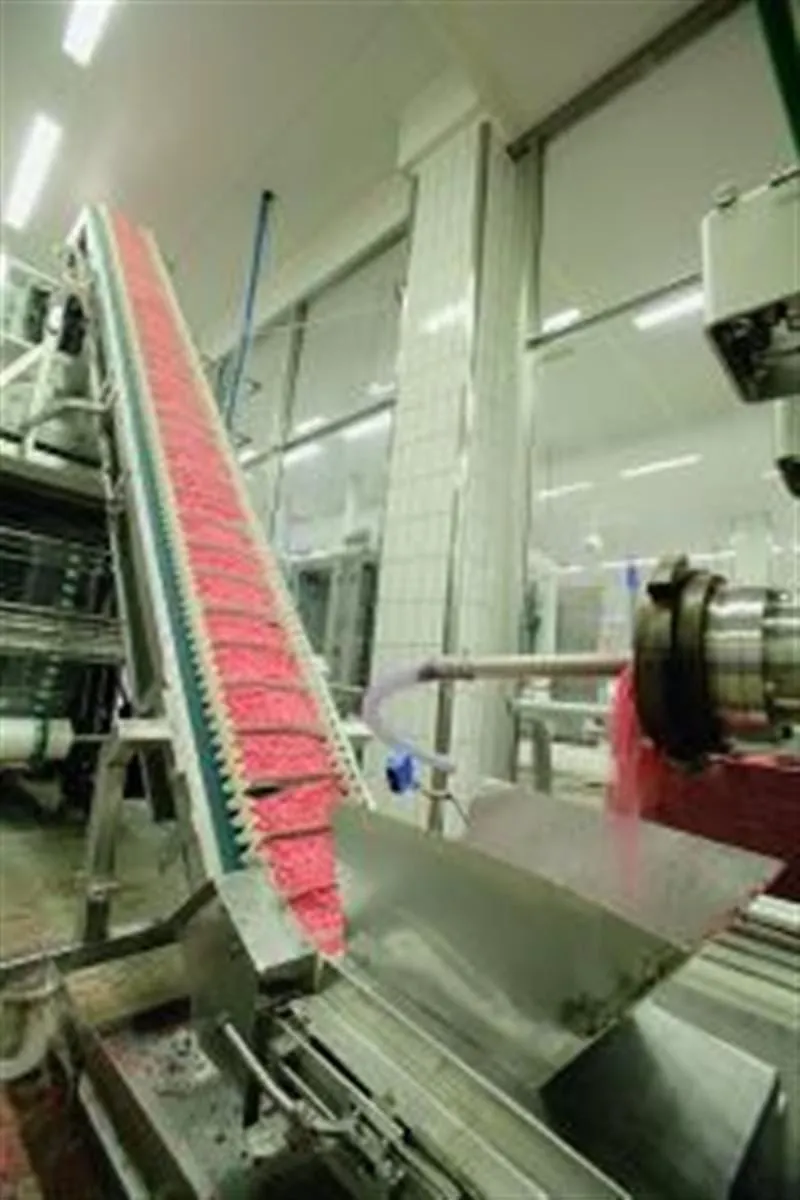
For further processing of deep-freeze products, contact plate freezers and shock rooms with mechanical cold are used. To break up fresh and deep-frozen meat, various lines with different automatic grinders are available. In addition, a number of mixer-grinders with integrated fat analysis functions are used.
After grinding, some products are formed into hamburgers on Formax forming machines and subsequently packaged fresh, or frozen in a freezer (coolant: N2). Part of the production is processed into fresh or deep-frozen ground meat. To package ground meat, Bell uses stretch vacuum packagers as well as form-fill sealing bag equipment with upstream multiple-head scales.
During portioning, products for self-service markets can be cut precisely to weight and packaged according to requirements. Cutting equipment with optical image recognition (laser optics) as well as equipment for volume cutting is available. www.bell.ch